

Steel Manufacturing project preview

Steel Manufacturing

Manufacturing Execution & Industrial IoT Monitoring

Industry
Manufacturing & Heavy Industry
Duration
14 months
Size
20 members
Client
Not stated in the deck - to confirm
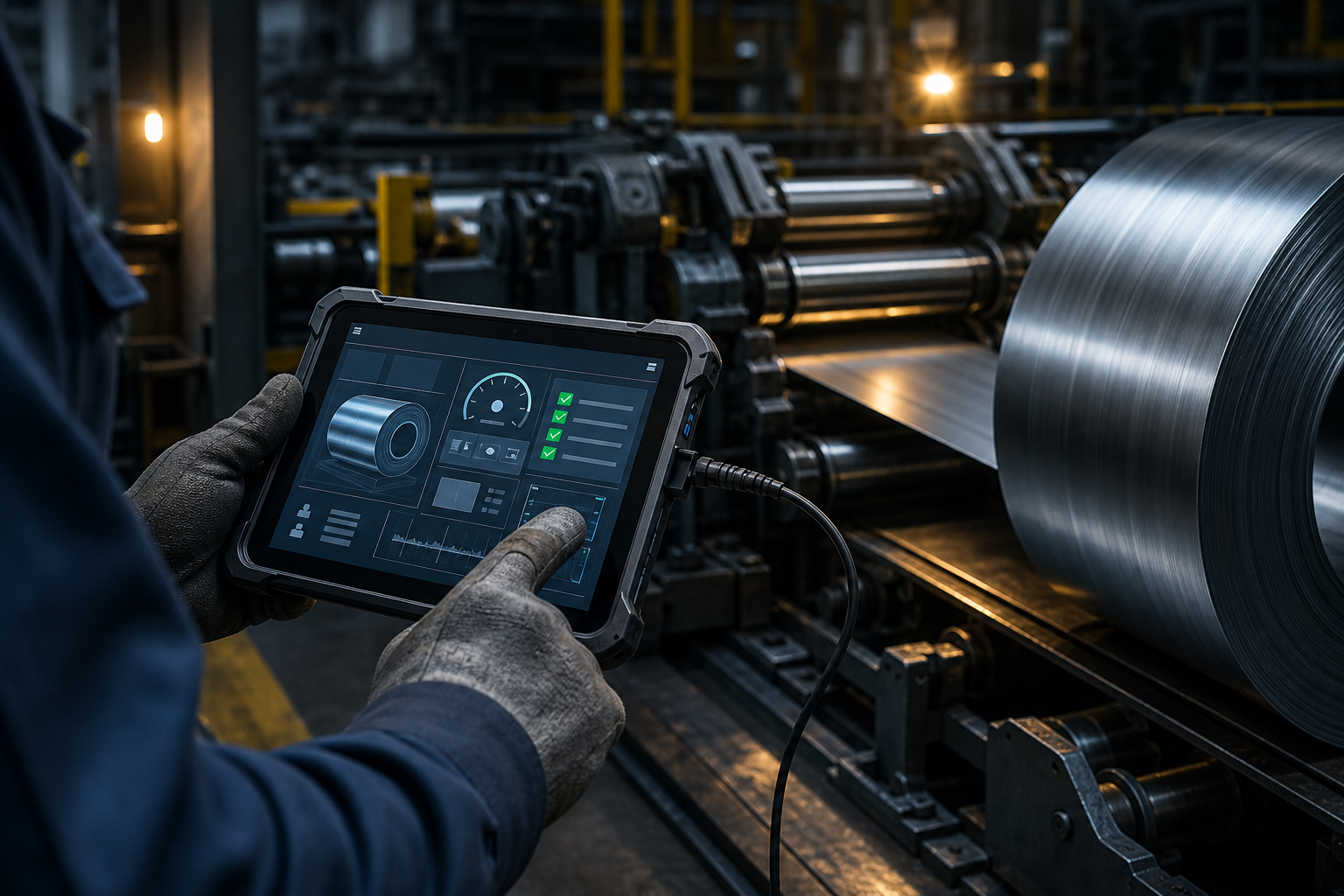
Rugged tablet quality inspection on a steel production line
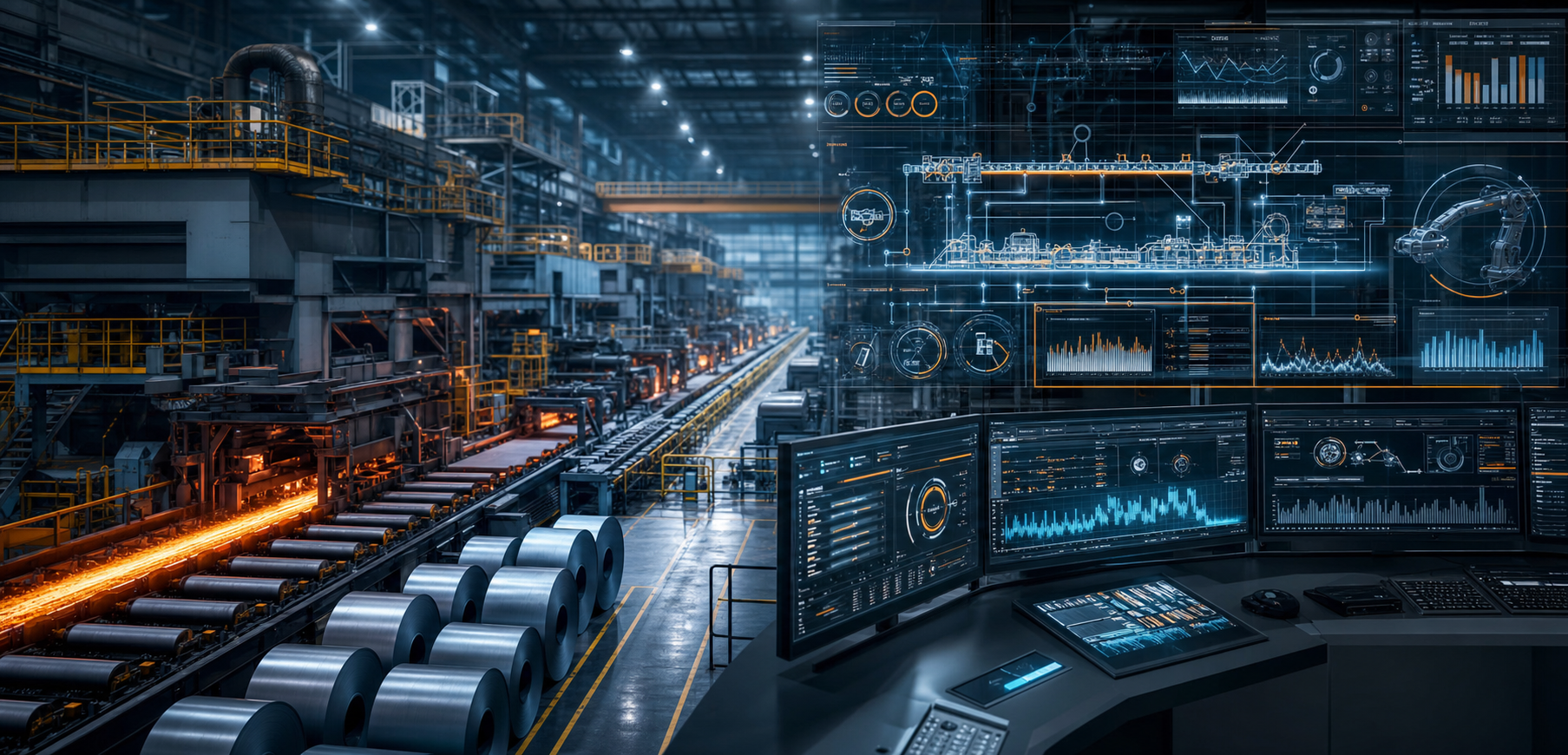
Steel factory digital twin and operations monitoring

The Challenges

  • The business runs one continuous chain - a customer invoice order comes in, materials are handled through processes, results are recorded, a delivery request is raised and the goods ship. Any system covering only part of that leaves gaps where information is lost.
  • Tasks were not registered anywhere central, so who was doing what, and whether it was finished, depended on asking.
  • Materials could not be traced through the process, which means a quality complaint could not be tracked back to the batch or the step that caused it.
  • The work happens at the product, not at a desk. Quality checks, shipment preparation and product confirmation were recorded on paper first and typed in later, or not at all.
  • Management had no single view. Sales, production, product and customer information sat in different places.
  • Machine problems were found when a machine stopped. Replacement was an emergency rather than a plan.
  • A factory floor does not have reliable network coverage, so a mobile tool that needs a connection is a tool that stops working at the worst moment.
  • Machine and facility data arrives constantly as events and has to be usable, not just stored.
  • Order data crosses several services, and a mismatch between them shows up as a wrong shipment to a customer.

Approach & Our Solution

  • Modelled the full manufacturing flow first - order intake, material handling, result tracking, delivery request, shipment - and built every channel onto that one flow rather than as separate tools.
  • Built the web application around the working procedure: register a task through the process, assign it, execute it, record the result.
  • Tracked working material information with a history log, so each material carries its own record through the process.
  • Built a native Android application for the floor, letting people check quality, prepare shipments and confirm product information while standing at the product.
  • Stored mobile data locally in SQLite so the application keeps working when the network does not, and syncs when it returns.
  • Built dashboards covering sales, product, manufacturing and customer information in one place.
  • Connected the facilities over IoT so each one reports in, machine state is monitored continuously, and errors surface early.
  • Handled device events through AWS Lambda and GraphQL, so telemetry is processed and queried without standing infrastructure behind it.
  • Ran the platform on AWS with load balancing, CloudWatch monitoring, CDN and Redis caching.
  • Applied test-driven development across the lifecycle and built end-to-end test suites covering full workflows, specifically to hold data integrity across services.

Key Outcomes

  • A customer order can be located at any point between invoice and shipment, so "where is my order" is answered from a screen instead of by walking the floor.
  • Material history is recorded through every step, which means a quality complaint is traced back to the batch and the process that caused it - and the same record shows whether other orders are affected.
  • Supervisors see what has been assigned, what is finished and what is late without waiting for a shift handover.
  • Quality checks and shipment confirmations are recorded once, at the product, by the person who did the work. The paper stage and the transcription errors that came with it are gone.
  • Work continues when the network drops, so a connectivity problem stops being a production problem.
  • Management reads sales, production and customer information on one screen, so decisions come from current numbers rather than a compiled report.
  • Machine condition is visible before failure, so replacement is scheduled around production instead of interrupting it, and unplanned downtime becomes a smaller share of lost output.

Tech Stack

  • Frontend: ReactJS, TypeScript
  • Backend: Node.js, TypeScript, GraphQL, TypeORM, PostgreSQL
  • Cloud & architecture: AWS - load balancing, Amazon CloudWatch, CDN, Redis caching
  • Mobile: Native Android with SQLite for local storage and offline capability
  • IoT: serverless AWS Lambda with GraphQL for event processing and device data querying
  • Quality: test-driven development across the lifecycle; end-to-end test suites covering full system workflows and cross-service data integrity
ReactJSTypeScriptNode.jsGraphQLPostgreSQLAWSAndroidSQLiteAWS LambdaRedis
Bamboo

BambooAI is a startup digital agency of design, development and Artificial Intelligence that works friendly with global client

contact@bamboox.ai